An interview on healthy ageing with Terry Reid
From our Humans of Salveo Healthcare series
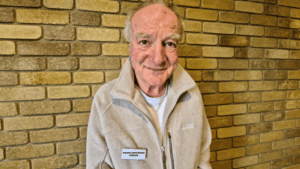
At Salveo Healthcare, we love sharing the stories of people in our community. Terry Reid is one of those people whose life has taken him through wild places, big challenges and plenty of unexpected turns. He is thoughtful, practical and full of stories. At 73, Terry has faced serious health setbacks, major life changes and the loss of his central vision, but he still talks about life with curiosity, humour and a strong sense of perspective.
As Terry says, "Every day over 70 is a bonus." He does not say this lightly. For him, it is a reminder to keep going, keep learning and make the most of what is still possible.
Early life and a love of the bush
Terry grew up in Queenstown on Tasmania's West Coast. He started his working life as an electrician, completing an apprenticeship at the mine. But his path took many turns. He worked as a maintenance electrician at the Alfred Hospital in Melbourne, spent time with Rank Xerox working on photocopy machines, and later moved into education and outdoor learning.
Terry has always loved the bush. As a scout leader, he enjoyed introducing young people to the outdoors. That love eventually led him into Parks and Wildlife, where he built a long and memorable career. He spent winters on Macquarie Island helping remove feral cats, worked with the fox taskforce in Launceston, served as senior ranger on Maria Island and spent much of his time around Queenstown, the Franklin River and Frenchmans Cap.
"Nobody will ever go into Frenchmans Cap more times than I have," he says. For Terry, these places are not just landscapes. They are part of his life story.
Health challenges and big changes
Terry's health journey has been complex. A medical check picked up that he had previously had a heart attack without knowing it. This led to regular cardiology appointments, stress tests, stents and, eventually, open heart surgery.
Around the same time, Terry lost his central vision due to Leber hereditary optic neuropathy, a genetic condition that had affected several members of his family at a much younger age. Terry describes himself as vision impaired or legally blind, although he is quick to say he can still manage most things.
"My life has flipped," he says. Everyday tasks have changed, but Terry has found ways to adapt. He uses voice to text, magnification tools, a clear view device to read mail, and small tactile bumps on appliances to help him use the microwave, oven and stereo safely.
He is also learning to use new technology, including smart glasses. Terry describes himself as a "slow adopter" rather than someone who refuses technology. He knows it now plays a big role in his independence and quality of life.
Staying independent
Terry is clear about one thing: he is fiercely independent. He walks to his local shopping centre, catches buses, uses taxis when he needs to, and works out ways to manage daily life without relying on others unless he has to.
His vision loss has made some parts of life more difficult. He needs to be careful around traffic, especially electric cars, black cars and busy pedestrian areas. He has also had moments where people have not understood his disability because it is not obvious from the outside.
But Terry is practical about it. He explains what he needs when he has to, accepts help from trusted friends, and keeps finding ways to do things for himself. "I'll try and try until it's clearly obvious I can't do something," he says.
The Health Reset Program
Terry joined Salveo Healthcare's Health Reset Program, delivered in partnership with St Lukes, during a time of significant change in his health and daily life. He was supported by Abby, his Health Reset Program nurse, who helped him set a meaningful goal: to return to Fraser Creek Scout Hut, an old bush hut he had looked after for more than 40 years.
The path to getting there was not easy. Terry faced setbacks along the way and had to adjust to new challenges, but he kept working towards the goal. By the end of the program, he made it back to the hut.
"We'd set this goal much earlier on, and then all these other things happened, and I still managed it," he says.
For Terry, the program was not just about health checks or exercises. It was about being supported to keep doing something that mattered to him. He speaks warmly about Abby and the way she explained things, helped him with practical challenges and encouraged him along the way.
"She explained everything," Terry says. "I'm so pleased I got her."
A practical approach to health
Terry puts a lot of trust in health professionals, but he has also learned the value of asking questions. After recent lung issues, he asked his surgeon to explain exactly what was happening. That conversation helped him understand his body and what doctors were investigating.
His advice to others is simple: if you do not understand something, ask.
"Question anything you're unsure of," he says.
Terry also believes in the basics of healthy ageing. He no longer smokes, eats plenty of fruit and vegetables, and stays as active as he can. These days, his activity looks different from the long bushwalks of his earlier life, but he still walks, gets out when he can and hopes to return to the hut again once his lung health improves.
Staying curious and connected
Terry is comfortable in his own company, but he is far from disengaged. He follows local, national and international news closely, listens to ABC Radio National, goes to a weekly trivia night, catches up with former Parks and Wildlife colleagues, and helps with research for books about Tasmania's bushwalking history.
He still thinks deeply about politics, the environment, technology, community and the way the world is changing. He may describe himself as someone who is not overly social, but his life is still full of connection, purpose and interest.
He also values the friends who help him with technology, emails, photos, housework and appointments. Their support helps him stay independent, but it is clear Terry still likes to do as much as he can for himself.
A glass half full outlook
When asked how he manages stress and stays positive, Terry's answer is simple. "Nothing much stresses me," he says.
His outlook is grounded in acceptance. If something needs to be done, he does it. If he has to go into hospital, he goes. If life changes, he adapts. He does not spend too much time looking back or worrying about roads not taken.
For Terry, a life well lived is about being content with the decisions you have made. He thinks of the line from the song, My Way: "Regrets, I've had a few, but then again, too few to mention."
"Don't worry about the past, because there's nothing you can do about it," he says. "You made a decision. That's it."
A life lived his way
Terry's story is a reminder that healthy ageing does not always look neat or simple. It can include illness, recovery, vision loss, new technology, changing routines and learning different ways to do familiar things. But it can also include humour, independence, purpose, staying informed, bush tracks, old huts, good questions and a strong will to keep going.
Terry's key tip for ageing well is to keep a "glass half full" attitude. He believes it is important to look at life in a positive light, no matter what comes along.
And Terry has certainly had a lot come along.
Still, Terry keeps moving forward with curiosity, humour and determination. He continues to live life his way, and we can't wait to hear about his next trip back to the hut.
This information is general in nature and individualised medical advice should be sought from a general practitioner (GP) or appropriate medical practitioner.